Download brochure
For further information about the M&W Plastic Sampling Bucket, download the brochure here.



Plastic Sampling Bucket
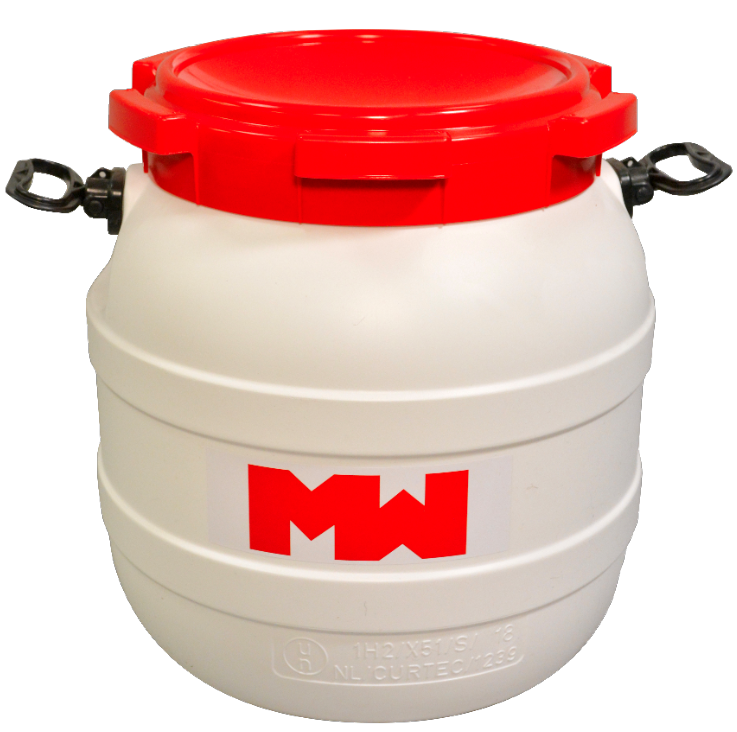
High-capacity (42 L) PSB with carry handles for manual transport

Range of Plastic Sampling Buckets
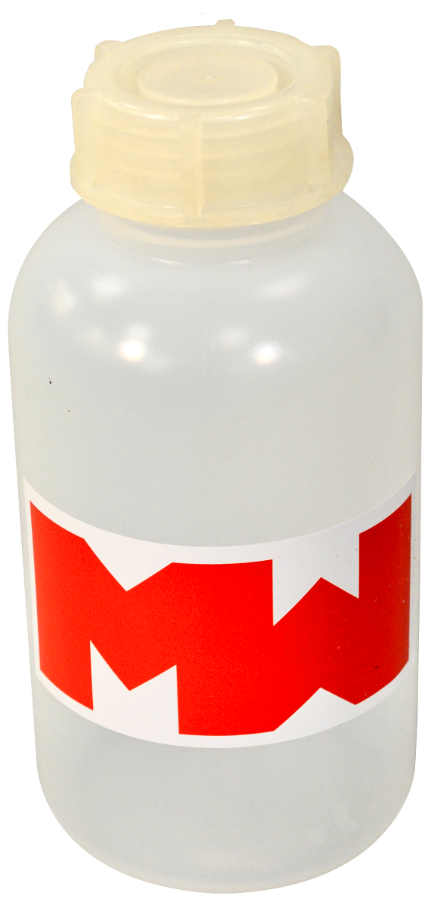
Small-volume (2L) PSB for lab analysis

Multiple PSBs in automated sample magazine for fewer manual change-overs

26 L PSB in automated sample magazine

RFID links each bucket to correct sample

Dual bucket filling for defined sample routes




The Plastic Sampling Bucket (PSB) protects sample integrity after collection. It creates value where exposure, material loss, contamination or sample mix-ups can weaken the link between the sampled material and the analysis result.
In automated and repeatable sampling workflows, the PSB provides a lightweight, robust, sealable and identifiable High Density Polyethylene (HDPE) container for receiving, storing and transporting sampled material between the sampling point, sample preparation area and laboratory.
The PSB is available in standard sizes from 1 L to 42 L, with larger versions available up to 80 L. For applications with specific handling or process requirements, custom sizes can be supplied on request.
The PSB is supplied with an airtight and waterproof sealable lid with screw cap and rubber gasket to help protect the sample during storage and transport.
Radio Frequency Identification (RFID) can be added to identify each bucket electronically and connect the physical bucket to the correct sample, batch, process line, shift or laboratory workflow.
The PSB is designed for free-flowing bulk samples handled material temperatures from -25 °C to +60 °C. Its robust, impact-resistant HDPE body combines low weight with industrial durability, so the bucket is easy to handle but strong enough for routine sample logistics.
A sampling bucket must do more than hold material. It must help protect the sample against exposure, loss, contamination and mix-ups after collection:
Exposure, loss, contamination and mix-ups create the same commercial problem: the analysis can no longer be trusted as a reliable representation of the collected sample.
M&W JAWO Sampling offers both plastic (PSB) and stainless steel sampling buckets (SSSB) for different sample-handling requirements:
| Use the PSB when… | Use the SSSB when… |
|---|---|
| The sample is dry or moist, free-flowing and handled at -25 °C to +60 °C. | The sample is hot, very wet, sticky, sharp-edged, dense or strongly abrasive. |
| A robust, lightweight bucket, sealable storage and easy manual handling improve the daily workflow. | High mechanical strength, washdown tolerance, impact resistance or temperature durability are key requirements. |
| The sample has high contamination sensitivity, high value, aggressive chemistry or demanding cleaning requirements. |
For both bucket types, Radio Frequency Identification (RFID) can be added to connect each bucket to the correct sample, batch, process line, shift or laboratory workflow. In automated sampling operations, RFID helps reduce sample mix-ups, supports traceability and makes it easier to connect each physical bucket to the correct sample route.
| Feature | What it means | Benefit |
|---|---|---|
| Lightweight plastic construction | Easier to lift, move and store than heavier containers. | Reduces physical handling effort in daily sampling routines. |
| Airtight and waterproof lid with gasket | The lid with screw cap and rubber gasket helps protect the sample during storage and transport. | Reduces the risk of avoidable sample degradation or external contamination. |
| Shock-proof and sealable closure for controlled sample logistics | The bucket can be closed and sealed when required. | Supports controlled storage, transport and chain-of-custody routines. |
| Compatible with Sample Magazine workflows | The PSB can be used where multiple buckets are filled and stored in a Sample Magazine. | Allows filled buckets to remain in the magazine until collection, reducing the need for immediate manual replacement after each filling. |
| Tight Sample Magazine option | In applications requiring tighter sample control, the Sample Magazine can be supplied in a version where the buckets are lifted against a gasket to help keep them sealed. | Helps reduce unnecessary exposure during automated bucket storage and supports more controlled sample handling. |
| RFID option | Electronic identification can be specified as long-range UHF/RAIN RFID or close-range embedded/proximity RFID, depending on the read point. | Reduces sample mix-ups and supports traceability in automated sample magazines. |
Contact M&W JAWO Sampling for guidance on selecting the right sampling bucket for your sampling system, material and sample-handling process.
The right sampling bucket should fit the complete workflow: sample collection, storage, transport and analysis.

For further information about the M&W Plastic Sampling Bucket, download the brochure here.

The PSB is well suited for use with the Sample Magazine (SM) from M&W JAWO Sampling, where sampling buckets are filled automatically after the sampling process has been completed.
The Sample Magazine also functions as a storage unit, as multiple buckets can be installed inside the magazine. This allows the system to continue the sample collection routine without requiring each filled bucket to be replaced immediately. Instead, the Sample Magazine rotates to the next empty bucket, while the filled bucket remains stored for later removal. This reduces manual intervention, saves operator time and supports more consistent sample handling.
For applications requiring tighter sample control, the Sample Magazine can be supplied in a tight version where the buckets are lifted against a gasket to help keep them sealed.
The PSB can also be used in systems where sampled material is split or directed into different sample routes, for example together with the M&W Dual Splitter (DS), where buckets are filled in parallel or according to defined sample routes.
The PSB is relevant for industrial sampling systems where low weight, practical handling, sealed storage and multi-bucket routines are important. It is especially useful where samples are collected into several buckets over time and where operators should not have to replace a bucket immediately after every filling cycle. The table below shows typical application examples. It is not an exhaustive list of all industries or materials where the PSB may be used.
| Industry | Typical PSB use |
|---|---|
| Mining | Coal samples, selected ore fines, pellets and prepared mine-site sub-samples at normal handling temperatures. |
| Metals & Minerals Processing | Mineral powders, prepared concentrates, pellets and intermediate process samples moving between sampling, sample preparation and laboratory analysis. |
| Precious & Base Metals Recycling | Recycling and recovery samples such as e-scrap fractions, industrial by-product powders, catalyst-related materials and controlled sub-samples where sealed identification and traceable logistics are important. |
| Cement | Cement, raw meal, limestone powder and similar dry powder sample workflows where sealed, low-weight bucket logistics improve handling and storage. |
| Fertilizers | NPK, potash, urea, phosphate and similar dry fertilizer granules or powders requiring sealed storage, easy identification and practical handling. |
| Energy & Power Generation | Coal, petcoke, biomass and selected dry ash sample workflows where automated sample magazine handling reduces operator intervention. For hot ash, slag or high-wear duties, use the SSSB. |
| Chemicals | Plastic granulates, additives, industrial powders and selected dry chemical samples where sealed storage, clear identification and low handling weight improve sample handling and logistic. |
| Laboratory & Research | Practical storage, sealing, transport and identification of industrial sample material between pilot equipment, sample preparation and laboratory analysis. |
| Food & Feed | Grains, seeds, animal feed pellets, sugar and similar dry food or feed sample streams. The PSB creates value through food-contact approved plastic, sealed storage and clean low-weight handling. |
| Specification | Details |
|---|---|
| Standard sizes | 1 L, 2 L, 3.6 L, 8 L, 10 L, 26 L and 42 L |
| Larger sizes | Available up to 80 L; custom sizes on request |
| Material | High Density Polyethylene (HDPE) |
| Lid and sealing | Airtight and waterproof sealable lid with screw cap and rubber gasket. |
| Material temperature | -25 °C to +60 °C |
| Impact resistance | Resistant to normal industrial drops and impacts during sample handling |
| Standard color | White bucket with red lid |
| RFID options | Two PSB RFID options: long-range UHF/RAIN RFID for read ranges of approximately 3–4 m in a correctly configured installation, and close-range embedded/proximity RFID for fixed reader positions. SSSB uses close-range, metal-compatible/on-metal RFID only. |
| Food contact compliance | EU Regulation 10/2011 compliant; FDA approved for US food safety standards. Compliance scope must cover bucket body, lid, gasket and pigment in the delivered configuration. |
| UN/dangerous-goods configuration | UN-certified 1H2 configuration available for relevant solid substances. Transport requirements must be verified against the delivered configuration and applicable IATA, IMDG, ADR or RID requirements. |
| Chemical compatibility | Good resistance to many dilute acids, bases, salts and alcohols when specified with the correct HDPE grade. |
| Dust guidance | Suitable for dry and dusty samples when the lid is used to protect the sample during storage and transport. |
| Moisture guidance | Best suited for dry or slightly moist, free-flowing samples. For wet, sticky or difficult-to-clean material, use the SSSB. |
| Reuse and recycling | Designed for repeated use when cleaned, inspected and handled correctly. HDPE is recyclable under material code #2 where accepted by local recycling systems. |
The PSB is available in standard sizes from 1 L to 42 L, with larger versions available up to 80 L. Custom sizes can be supplied on request.
The PSB can be specified with two RFID variants:
For stainless steel buckets, RFID is normally specified as a close-range metal-compatible/on-metal RFID solution.
What materials can the Plastic Sampling Bucket be used for? click to readmore
The PSB is suitable for dry, free-flowing materials including coal, ores, concentrates, cement, fertilizers, biomass, food ingredients, and many industrial powders and granules.
click to readless
Can the PSB be used for hot material? click to readmore
The plastic container is specified for -25 °C to +60 °C during normal use. For hotter material, or where impact, abrasion, cleaning, moisture or contamination risk is critical, M&W JAWO Sampling normally assesses the Stainless Steel Sampling Bucket or another verified solution.
click to readless
Is this sampling container food-contact approved? click to readmore
Yes, when supplied in the verified food-contact configuration. The compliance scope must cover the bucket body, lid, gasket and pigment used in the delivered configuration.
click to readless
Can the Plastic Sampling Bucket be used in automated sampling systems? click to readmore
Yes. The the bucket can be integrated with automated systems including the Sample Magazine and Dual Splitter (DS).
click to readless
How do I clean the PSB? click to readmore
It can be cleaned with water and mild detergent. For stubborn residues, gentle brushing is recommended.
click to readless
Is the bucket reusable? click to readmore
Yes. The PSB is designed for repeated use when cleaned, inspected and handled correctly.
click to readless
Can the Plastic Sampling Bucket be supplied with RFID identification? click to readmore
Yes. Two RFID variants are relevant for plastic buckets. The long-range UHF/RAIN RFID variant is used where the bucket must be identified from approximately 3–4 m in a correctly configured installation. The close-range embedded/proximity RFID variant is used where the bucket is read at a fixed point, for example in the Sample Magazine or handling station. Stainless steel buckets normally use close-range metal-compatible/on-metal RFID.
click to readless
What is the difference between the PSB and the Stainless Steel Sampling Bucket (SSSB)? click to readmore
The plastic bucket creates value through low weight, cost efficiency, sealable storage and verified food-contact configurations for routine dry sample-handling duties. The SSSB provides higher durability for hot, abrasive, sharp-edged, wet, sticky, aggressive or contamination-sensitive sampling duties.
click to readless
How should I store the PSB when not in use? click to readmore
Store the container in a clean, dry location away from direct sunlight and extreme temperatures. Keep the lid sealed to prevent contamination and moisture ingress.
click to readless
Can I use this sampling bucket for hazardous material sampling? click to readmore
A UN-certified configuration is available (1H2) for relevant solid substances. For hazardous materials, M&W JAWO Sampling verifies chemical compatibility, closure requirements, and transport configuration before supply.
click to readless
What colors are available for the Plastic Sampling Bucket? click to readmore
The standard PSB is white with a red lid. Custom colors may be available upon request.
click to readless
How do I order replacement lids or gaskets for the PSB? click to readmore
Contact M&W JAWO Sampling directly. Replacement parts are available to extend the life of your sampling containers.
click to readless
How do I close the PSB correctly to ensure UN compliance? click to readmore
Detailed closure instructions are supplied with every UN-certified PSB
click to readless
Can I make this sampling container tamper-evident? click to readmore
Yes. After closing the lid correctly, you can add tamper-evident seals using sealing loops on both the lid and bucket. Note that sealing is not required to validate the UN marking.
click to readless
Can I lift the Plastic Sampling Bucket with a hoist or mechanical equipment? click to readmore
No. The handgrips are designed for manual displacement only, not for mechanical lifting. For mechanical handling, use alternative lifting methods or the Stainless Steel Sampling Bucket (SSSB).
click to readless